


1. INTRODUCTION
Fitting hospital furnishings inside a car is not the only aspect of designing a mobile medical unit. Every decision has an impact on how pleasantly and safely employees can care for patients months later, on a steamy afternoon, at the conclusion of a difficult road. It is worthwhile to spend actual time on planning decisions before any metal is cut because they are costly and difficult to modify after the build is complete.
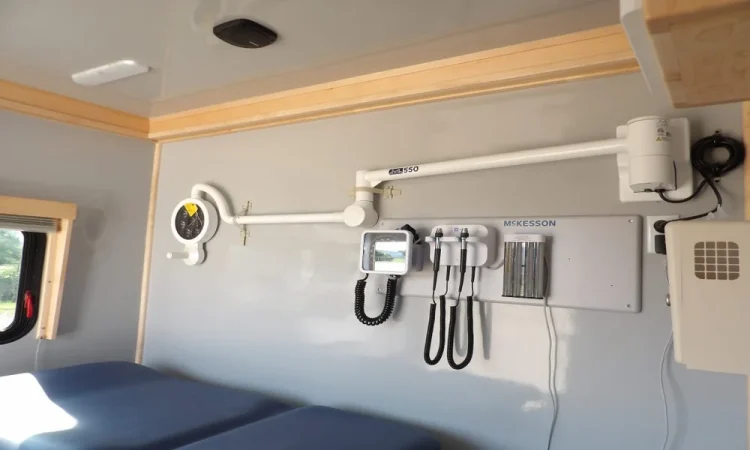
Designing effective mobile medical units requires careful attention to both clinical needs and the practical realities of working in a moving, compact environment. The layout must give healthcare professionals enough room to work safely while ensuring that patients can enter, receive care, and leave comfortably. Reliable power, climate control, sanitation systems, secure storage, and accessibility also need to be considered from the beginning so the unit can provide consistent care across different locations and conditions.
2. START WITH THE MEDICAL PURPOSE
What the device will actually do is the first question. The space, equipment, and privacy requirements of a general examination clinic, a dental clinic, a mammography unit, and a vaccination truck vary. By outlining the precise steps to be taken and the anticipated daily patient count, the designer is given a specific goal rather than an imprecise notion.
3. CHOOSING THE BASE VEHICLE
There is a real trade-off in size. Although a larger car has greater space, it might not be able to traverse flimsy bridges or fit through small hamlet alleys. Licensing is also important since a driver may need a specific permit to operate a bigger vehicle, which restricts who can do so. This decision is typically resolved swiftly when the unit’s routes are planned.
In order to prevent situations where patients and staff obstruct one another in a small hallway, movement within should follow a logical path from entry to examination to leave. It is necessary to prepare ahead rather than provide wheelchair access, a proper entry step or elevator, and a secluded location for exams.
5. POWER, WATER AND CLIMATE
Stable electricity is necessary for medical equipment and chilled medications. When one source fails, a combination of a generator, battery bank, solar panels, and shore power connection offers alternatives. Since heat soon renders an enclosed vehicle useless for both workers and patients, clean water tanks, waste water storage, and efficient air conditioning are equally crucial.
6. HYGIENE AND WASTE
Surfaces should have as few seams and corners as feasible, be smooth, and be simple to clean. Sharps containers, clinical trash, and soiled things need to be kept apart from clean goods in a designated area. Ignoring this during the design phase increases the chance of infection, which is impossible to completely eliminate with meticulous effort.
7. STORAGE, SAFETY AND MAINTENANCE
When the car brakes hard, loose equipment becomes dangerous, so everything needs to be fastened before traveling. Lockable cabinets safeguard valuables and medications. Finally, the design should allow easy access for servicing, so routine maintenance does not require dismantling half the interior.
8. CONCLUSION
A well-thought-out mobile medical unit is simple to operate and seems intuitive. A team may produce something dependable rather than just impressive by first defining the medical purpose and then matching the vehicle, layout, utilities, and hygiene arrangements to it. The best approach to ensure such specifics are correct is to involve the physicians and nurses who will work inside.